
"coffee plant introduction"
20000 article(s) found

Costa Rica Coffee Microprocessing Plant Introduction San Roman Processing Plant Selection Batch Introduction
Weixin Official Accounts cafe_style Costa Rica San Ramon Hummingbird Soft Orange Tara Pearl Production Area is located in the southwest of Costa Rica, near Volcan Poas, facing the Pacific Ocean, with unique microclimate conditions, including fat

Introduction of Kenyan processing plant and flavor characteristics of coffee processing plant
Kenya treatment plant introduction Kenya Karogoto Kenya Karoguto production area Neri (Nyeri) treatment plant (Karogoto) 1800 meters above sea level variety SL28, SL34 cooperative Tekangu FCS producer cooperative member small farmer Karoguto (Karogoto) washing treatment plant with Tegu washing treatment plant and Ngunduru washing treatment plant

Introduction of planting Environment in Nicaragua introduction of coffee producing areas in Nicaragua
Nicaragua is planted with volcanic ash and shaded by trees to produce high-quality Nicaraguan coffee with a mediocre, soft and slightly sour flavor. Nicaraguan coffee is the largest of all coffee beans, while MADRIZ (Madriz) is located in the mountains of northern Nicaragua, adjacent to NuevaSegovia,Jinotega and Esteli, which is quiet and elegant.

Ethiopia Coca Lei Bologna-Kerry processing Plant Information introduction Water washing Cochele Coffee style
For the exchange of professional baristas, please follow the Coffee Workshop (Wechat official account cafe_style) Bologna-Corey processing Plant Information introduction this batch of Yegashev comes from a processing plant in a sub-production area called Korie in the Cochere region, and Borona means southern in Amharic. This batch of raw beans is purchased directly from the processing plant, which is used by someone.
Introduction to Fine Coffee-- A brief introduction to the cultivation of Taiwan Coffee
In the 19th century, after the film festival, the British businessman "German Foreign Company" came to Taiwan to do business and found that the environment of Taiwan was similar to that of South Asia and Central and South America. In 1884 (10 years of light), Nila introduced more than 100 coffee seedlings "Arabica" and planted him in the mountains of modern Taipei. However, he was tired of kicking, and because of packaging.

Introduction of planting methods of coffee trees introduction of planting conditions of various coffee trees which country is the most suitable for planting
Field management of loosening soil and weeding: when the seedling height is 3cm to 6cm, the weak or overdense seedlings are pulled out; when the seedling height is 10cm and 13cm, the plant distance is about 30cm. Soil loosening and weeding were carried out at the same time between seedlings and fixed seedlings to keep the soil loose. Coffee beans are more drought-tolerant, and the soil can grow normally when the soil moisture is maintained. During the drought, the coffee beans should be properly watered, but there should be less squatting seedlings during the seedling fixing period.

Introduction of coffee products: introduction of Nestl é three-flower plant fat light milk tea coffee companion light condensed milk
Ingredients list: milk water whey powder milk powder storage method: stored in a cool and dry place shelf life: 365 days Food Additives: soybean phospholipid hydrogen phosphate Dinna carrageenan Product name: baking raw material Nestle Sanhua plant fat light milk net content: 410g brand: Nestle Nestl é series: Sanhua plant fat light milk 410g Sanhua plant fat condensed milk

Introduction to coffee treatment of Ruarai Lusaka cooperative in Kenya-introduction of Kenyan coffee beans
Professional coffee knowledge exchange more coffee bean information please follow the coffee workshop (Wechat official account cafe_style) Kenya Coffee Luale (Stone Creek) washing Plant Ruarai Luale Water washing Plant (Ruarai Factory) was built in 1951, the Luale River Ruarai flows through the washing plant, hence its name. Coffee growers belong to Ruthaka Farmers' Cooperative (Ludaka Farmers' Cooperative).

Introduction of Coffee planting techniques and growth habits introduction of planting methods of Coffee trees
Field management of loosening soil and weeding: when the seedling height is 3cm to 6cm, the weak or overdense seedlings are pulled out; when the seedling height is 10cm and 13cm, the plant distance is about 30cm. Soil loosening and weeding were carried out at the same time between seedlings and fixed seedlings to keep the soil loose. Coffee beans are more drought-tolerant, and the soil can grow normally when the soil moisture is maintained. During the drought, the coffee beans should be properly watered, but there should be less squatting seedlings during the seedling fixing period.

Introduction to the demand of planting Environment and Weather conditions of Coffee trees; introduction of domestic coffee Yunnan and Hainan
The planting conditions of coffee trees introduce the coffee trees planted in north-south direction and east-west direction, and there is no difference in yield. This is the orange fruit obtained by the Coffee Institute of Chulvado in a test lung. The trial material is a rejuvenated coffee tree. It is said that coffee trees that plant in the east-west direction appear to grow more vigorously than those in the north-south direction six months after they are cut off and new branches are drawn.

Yunnan Arabica coffee quality introduction Tin card coffee estate varieties planting market price introduction
Yunnan can be said to be the only province where Arabica is still planted in large areas. The main planting areas are concentrated in Lincang, Dehong, Baoshan, western Yunnan and Pu 'er Banna, southern Yunnan. The coffee introduced by missionaries in the 19th century is mainly Robusta, and no large-scale planting has been carried out since then. In the 1950s, Soviet experts assisted the world's two mainstream Arabica varieties: iron pickup typica and wave.
Introduction History of Yunnan Coffee, the Old varieties of Yunnan Coffee
Coffee originated in Ethiopia in north-central Africa. It was introduced into the Arabian Peninsula before the 15th century, introduced into Taiwan in 1884 and introduced into Hainan in 1908.

Introduction of Kenyan Coffee Flavor introduction of Kenya Water washing Qiliya Gachimenti treatment Plant
Professional coffee knowledge exchange more coffee bean information please follow the coffee workshop (Wechat official account cafe_style) Kenya is a model country for producing fine coffee beans. Coffee was introduced from Britain in 1900, and only traditional Arabica did not have the best bourbon species of SL28 and SL34 in Kenya until 1950. All water treatment methods are collected and AA PLU is graded.

Planting High altitude Coffee density-- introduction to the requirements of planting Environment for planting Coffee
Planting high altitude coffee density-requirements for planting environment for growing coffee introduction 3000-6000 feet high altitude (about 1000 meters to 2000 meters) provides ideal growth conditions for coffee: an average frost-free climate of 60-70 degrees Fahrenheit throughout the year, about 80 inches of moderate rainfall, plus abundant sunshine. Coffee beans grow slowly in cold mountain areas, but the slow ripening process makes coffee

Introduction to Fine Coffee-A brief introduction to the Market Price of Crystal Coffee varieties in Taiwan
In the 19th century, after the Sino-Japanese holiday, the Japanese occupied Taiwan and tried their best to promote coffee with high economic value. in 1941, Taiwan's coffee output was rich and its taste was good, which created the full period of coffee in Taiwan. however, soon after the launch of the Pacific Coffee in Japan, the sale of coffee became a problem, and there was no one to take care of it. Japan failed to withdraw, and the coffee fell after the lack of money.

Coffee species introduction Coffee Tree introduction Coffee planting method
Arabica was the only kind of coffee beans, then in the 19th century, there was a large area of diseases and insect pests, coffee growers began to look for other varieties of coffee resistant to diseases and insect pests, so Rob's special was discovered and began to be planted artificially. Robert's special growth in low-altitude areas, characterized by resistance to diseases and insect pests, cold, drought resistance, a word description, thick, but the taste is relatively comparative

Introduction of Coffee planting methods introduction of Coffee planting conditions
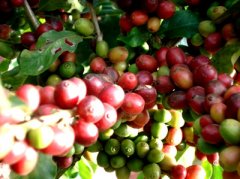
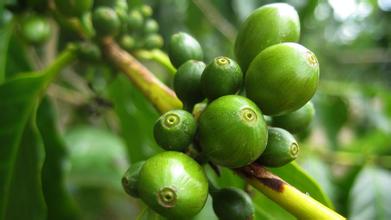
The first flowering period of the coffee tree is about three years old. the white five-petal tube-shaped flowers are filled with a faint scent of jasmine and the inflorescences are arranged in dense clusters. Flowers wither after two or three days of blooming and begin to bear fruit after a few months. The fruit is a drupe with a diameter of about 1.5 cm, which is green at first, then turns yellow gradually, and turns red after ripening, which is very similar to cherries.

Introduction of Panamanian Purple Rose Coffee Bean planting microclimate introduction of Purple Rose Flavor
Panama purple rose water wash 40% geisha variety: Geisha, Caturra baking degree: shallow baking method: water washing flavor: cherry, citrus, caramel, green apple, berry light elegant flower aroma, honey cream sweet fragrance, full and rich aroma! Delicate and juicy! Country: Panamanian production area: Pokuit grade: SHB altitude: 1500m unique and charming regional flavor fat

Introduction of Yega Chuefei Omar-Abedu processing Plant (Oumer-Abedu) introduction of Yega Xuefei Coffee
Professional coffee knowledge exchange more coffee bean information please follow the coffee workshop (Wechat official account cafe_style) Ethiopian coffee is mainly produced in eight major areas: Ekempti, Limu, Illubabor, Djimma, Harrar, Teppi/Bebeka, Sidamo, Yirgacheffe. Ethiopian coffee is highly rated in Taiwan, especially in Ethiopia.

Panamanian Coffee introduction A brief introduction to the cultivation of Panamanian Coffee Manor Jade Manor
Boquet green green raw beans, high moisture content, beans are soft beans, so good heat transmission, so there is no need to worry about uneven baking, aroma and taste are excellent, smooth taste, dark chocolate, nutty aroma, high alcohol thickness, low acidity, long-lasting. There are three ways of plantation: sunshine plantation, full shade plantation and semi-shade plantation. More than 50 plants per hectare